

Market stabilization is changing how insurance agencies grow, which means your strategy for the second half of 2026 might need to change, too. For the past few years, agencies have benefited from rate increases, strong retention, and growth that didn’t always require operational precision.
But that is changing.
In Vertafore's 2026 Insurance Agency Trends Report, 42% of agencies expect market stabilization. While a stable market sounds positive, it removes the tailwinds that have been pushing growth forward.
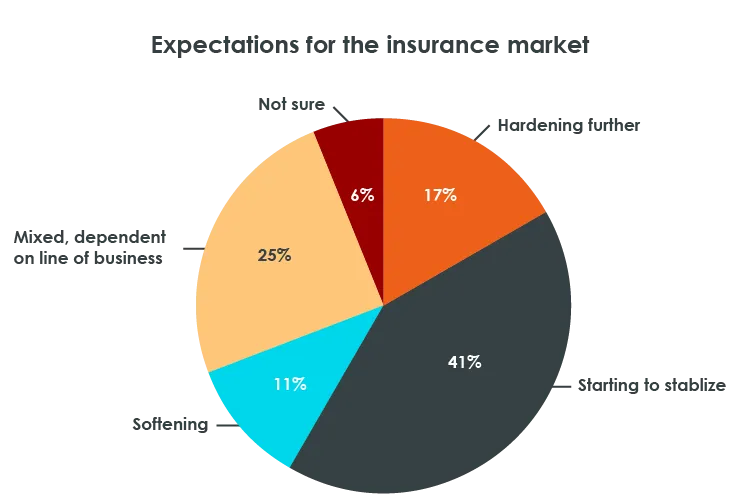
When pricing slows, what’s left gets exposed: Inconsistent client communication, manual workflows, and missed opportunities to improve retention and cross-sell. Which means growth becomes operational. The agencies that recognize this shift early will be able to adapt and head into the second half of the year with a plan they feel confident about.
Leading agencies are focused on solving on problem
When growth tightens, the instinct is to look outward for new tools, new channels, and new tactics, but the constraint of growth is usually internal.
When you look outward for solutions, often new technology is layered onto workflows that don’t scale, or experiment with AI before addressing the data and process issues underneath. The result becomes a cycle: find more tools and do more experimentation to fix new or amplified issues.
This isn’t a technology problem. It’s a systems problem.
AI and automation alone aren’t advantage—how it’s applied is
AI is one of the most discussed topics in the industry right now, but also one of the most unevenly applied. The trends data reflects that inflection point: While 39% of agencies are exploring AI, only a subset are seeing meaningful impact. Just 23% said they feel confident it will transform everyday work. That gap isn’t about adoption but about execution.
High-performing agencies are not trying to apply AI everywhere. Once they’ve fixed those problem areas, they can confidently integrate new tools into their existing systems. AI or automation doesn’t create efficiency on its own. It amplifies the systems already in place.
The best client communication runs on systems
More than half of agencies say client communication will be the primary differentiator between top performers and the rest. That’s often interpreted as a service mindset issue when, in reality, it’s an execution issue.
Most agencies communicate well but that communication is inconsistent: response times vary across teams, follow-ups depend on individuals, and communication tends to be reactive instead of proactive. From the client’s perspective, that inconsistency creates friction. It shows up as delays, unclear answers, and an experience that changes depending on who they talk to.
It’s important to treat communication as an operational system by standardizing workflows, automating key touchpoints, and creating visibility across interactions. The result is not just better service, but stronger retention and more predictable growth.
The second half of the year is where strategy gaps show up
By Q3 and Q4, you most likely aren’t asking what your strategy is; you're seeing the results of the one you already set.
Right now, you may feel like you’re in a holding pattern: exploring AI without clear implementation plans, aware of inefficiencies but not prioritizing fixes, and recognizing shifts in client expectations without changing processes. Staying in evaluation mode creates a widening divide between agencies that are operating with clarity and those that are waiting for certainty.
What to focus on before Q3 and Q4

Reassessing your strategy doesn’t mean doing more. It means focusing on what actually moves the business.
Start by identifying where work faces delays, duplication, and manual effort to find out where improvement will have the most impact. Next, look at your data. AI and automation depend on clean, structured information. Without it, workflows break and results become inconsistent. Finally, evaluate how your agency communicates with clients. Not whether it’s good in moments but whether it’s consistent across every interaction.